
Course outline & essential info
This course will not run in 2023. We are offering 2 Lake District ADVENTURE MEDICINE courses in July and the MOROCCO MOUNTAIN MEDICINE EXPEDITION in September.
Overview
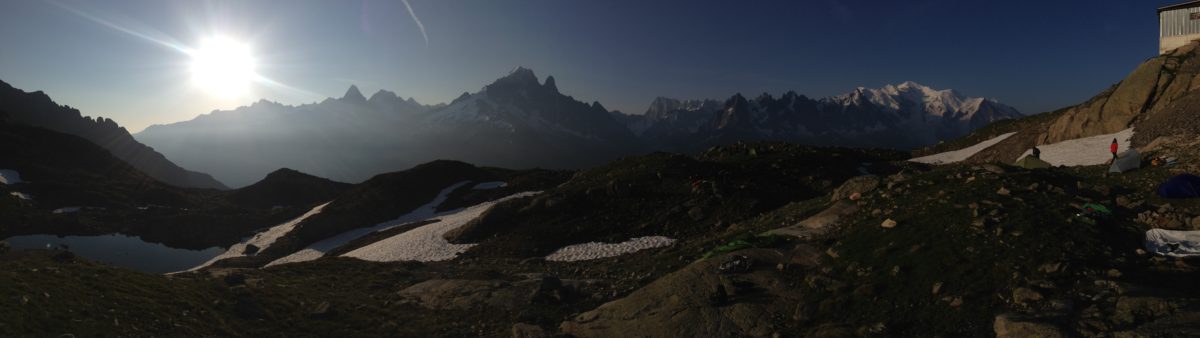
Held in Chamonix, France this intensive 5-day course combines wilderness medicine with learning many field skills needed to work in diverse environments including the mountains and jungle. Taught by a seasoned teaching team of leading expedition doctors and mountain professionals, the broad lecture programme with problem solving/planning exercises and case studies is dove-tailed with outdoor training sessions; the highlight of which is an overnight high mountain camp. All grades of medics attend. Earn 30 CPD hours and MSc credits. Easy access to Chamonix from Geneva airport. Optional glacier expedition after the course. Share accommodation with other delegates via the course WhatsApp group. Accommodation, travel, cablecars and meals are not included. “A fun-filled, inspiring big kids holiday with enough medical theory to stimulate our brains.” said a recent delegate.
Delegate feedback
Such a brilliant week!
Excellent faculty – no improvement needed.
A great insight into the character and demands of an expedition medic.
A fun-filled, inspiring big kids holiday with enough medical theory to stimulate our brains.
It was a perfect mix of theory and practise, with a very healthy daily dose of vitamin D in the outdoors.
It was refreshing to be amongst so many people like-minded professionals…
The course covered so much, at a good pace.
The course tested the comfort zone of quite a few people which is good. However, no one was made to feel awkward, inadequate or left out which is testament to the excellent abilities of the faculty as tutors and leaders.
Target audience
Doctors of all grades, nurses, OHPs, paramedics and medical students attend this course from around the world. No prior expedition experience is required. Moderate fitness is required.
Teaching Team
We always field a great teaching team of both medics and mountain specialists.
What’s included – not included TBC
The course fee includes tuition, a course manual and some refreshments during the lecture periods. WMT provides cooking stoves/fuel and pots for the overnight camping phase and specilist training gear such as ice axes, ropes etc. as needed.
You will need to budget for everything else – flights, airport transfers, accommodation, meals/food and approximately 25 euros for one cable car ride (for the overnight camp). No personal outdoor equipment, clothing or camping equipment is included. We’ll give you clear advice about what to bring but suggest that delegates DO NOT spend a lot of money on new, specialist kit or clothing.
Outline programme
Day 1
20.00 – 22.00 Informal/optional drinks gathering – Chambre Neuf bar
Day 2
9.00 Registration – Salle du Bicentenaire
9.15 Welcome, introductions, the week ahead
9.30 Bench marking exercise in local park (be dressed for the weather)
10.15 Tea/coffee
10.30 Expedition medical planning
11.45 Navigation essentials
12.15 Lunch
13.15 Acute mountain sickness (incl PAC demo)
14.00 Mountain hazards
14.30 Expedition orthopaedics (including pain)
15.15 Tea/coffee
15.30 Tropical medicine cases, snake bite
16.00 Human dynamics – cases
16.30 Briefing for next day
16.45 Insight lecture
17.30 Close
Day 3
8.30 Meet at Les Gailland climbing crag (St. Gervais train @ 8.18, disembark Les Pelerins @ 8.25)
8.45 – 16.00 Round robin of outdoor training sessions in 4 groups
1. Scene safety, vehicle extrication, moving, lifting and carrying
2. Practical splinting
3. Navigation 2
4. Fire & catering
ALL – Jungle living, personal jungle kit, bashas inc water purification, kit prep/packing, waterproofing
16.00 Bivouac briefing – teams later to shop for provisions
16.25 Close – return train @ 16.25 or walk
Day 4
8.30 Global Health
9.15 Hypothermia & frostbite
10.00 Coffee
10.15 Tropical medicine 2
11.00 Heat injury
11.30 Final briefing & disperse
13.00 Bivouac meeting point – tbc
14.00 Round robin of training sessions in 5 groups (3/5 Weds):
Mountain craft
Trauma scenarios (improvising, packaging, stretchers, heli safety, MR)
GPS, electronic navigation tools, SOS devices
Security on steep ground/rope work
Medical cases & medical kits
Set up bivy/tents & cook, then “fireside” chats
Day 5
Breakfast & pack up
8.00 Training activities continued (2/5):
10.30 Final emergency exercise
12.00 Descend to Chamonix
14.55 Reconvene in Bicentenaire / return cleaned kit
15.00 Chamonix mountain rescue
15.30 Mental health in the wilderness
16.00 Tea/coffee (glacier trekkers’ briefing)
16.15 Insight lecture
17.00 Recap of learning points from the course
17.15 Friday briefing, course evaluation, certificates
17.20 Insight lecture
18.00 Close
19.00 End of course BBQ @ Gite Le Vagabond. Food at 20.00
Day 6
0830 Guided hikes – meet at main train station
Glacier trekkers – follow earlier briefing
Day 7 – optional activity
Glacier trekkers – follow earlier briefing
Survivors’ drinks! TBC by delegates via WhatsApp
Glacier trekking expedition option
After the course we offer an optional glacier trekking experience at additional cost. Details in the dossier. See this video shot in on the winter course.
CPD
We estimate that this programme is valid for up to 30 CPD hours.
Find shared accommodation via WhatsApp
Join in the pre-course chatter and share accommodation options on the course WhatsApp group which delegates are invited to.
Downloads
Downloads are added prior to course dates.